
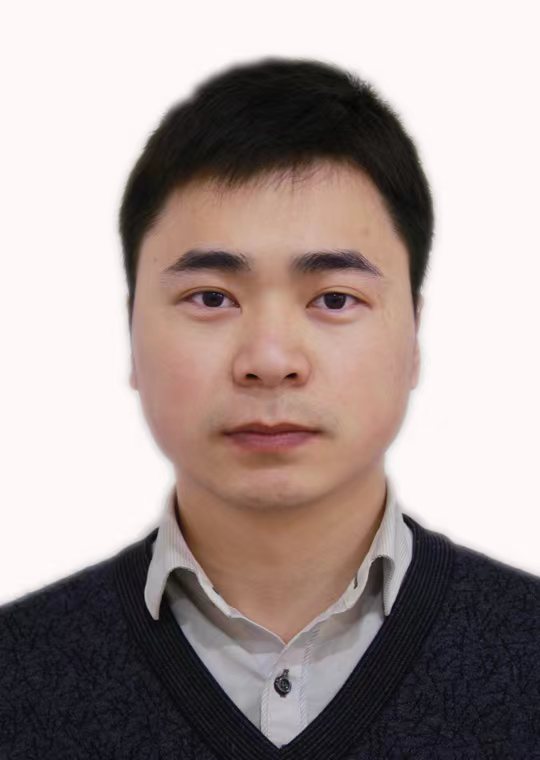
 | Prof. Jingkuan SongTongji University, China Professor Song Jingkuan is a Professor at the College of Computer Science and Technology, Tongji University. He is a recipient of the National High-Level Young Talent Program (Overseas) and a Distinguished Young Scholar of the National Natural Science Foundation of China (NSFC). His primary research interests include multimodal learning and embodied artificial intelligence. He has published over 200 papers in leading conferences and journals in multimedia, computer vision, and artificial intelligence, with more than 20,000 Google Scholar citations. He serves on the editorial boards of international SCI-indexed journals such as IEEE Transactions on Multimedia (TMM) and ACM Transactions on Multimedia Computing, Communications, and Applications (TOMM), and acts as a reviewer for multiple journals and an Area Chair for several top-tier international conferences, including NeurIPS, ACM MM, and AAAI. He has led a number of national-level research projects, including key programs funded by the NSFC and major R&D initiatives from the Ministry of Science and Technology. He is a recipient of the Wu Wenjun Artificial Intelligence Natural Science First-Class Award. Title: Preliminary Exploration of Data Challenges in Embodied Intelligence Abstract:Embodied foundation models, represented by vision-language-action models, mark a major paradigm shift in the field of embodied intelligence. Their goal is to build a comprehensive computational framework that unifies perception, language understanding, and physical interaction, offering new perspectives for addressing the long-standing core bottlenecks in robotics and physical intelligence, and laying the groundwork for achieving general-purpose embodied intelligence. However, the generalization capabilities of these foundation models still need improvement when facing novel scenarios and tasks, and they are prone to failure due to out-of-distribution issues when encountering "unknown intermediate states" during inference. At the same time, as model scale and capability requirements continue to grow, improving the quality and scale of training data and designing efficient optimization strategies have become critical challenges in the field. This talk will analyze the core elements and current research status of embodied intelligence, share our team's latest progress in constructing embodied intelligence data, and provide an outlook on future trends and opportunities, with the aim of offering valuable insights for advancing the deep development of embodied intelligence in the physical world. |
| Prof. Ji ZhangUniversity of Southern Queensland, Australia Professor Ji Zhang is a Life Fellow of the Royal Society of Arts (RSA), an Academician of the International Academy of Advanced Technology and Engineering, a Fellow of the Institution of Engineering and Technology (IET), a Fellow of the British Computer Society (BCS), and a Fellow of the International Association of Applied Science and Technology (IAAST). He is a tenured Full Professor of Computer Science and PhD supervisor at the University of Southern Queensland, Australia, as well as a Senior Member of IEEE. He has been recognised as an Australian Endeavour Fellow, Queensland Fellow, and Killam Scholar in Canada. Professor Zhang is also a co-founder and lead coordinator of SPMF, a major global open-source platform for data-mining algorithms, and Chair of the Conference Committee of IAAST. He has held visiting academic appointments at the University of Oxford, King’s College London, Michigan State University, Nanyang Technological University, and the University of Tsukuba, and has served as a visiting researcher at Singapore’s Agency for Science, Technology and Research (A*STAR). Professor Zhang’s principal research interests include artificial intelligence, big-data analytics, data science, machine learning, and intelligent computing. He has published more than 420 research papers in leading international journals and conference proceedings and is an author of ESI Highly Cited Papers. He has authored one research monograph and ten book chapters and has filed more than 40 patent applications. He has served in chairing roles at over ten international conferences and has frequently been invited to deliver keynote and invited speeches. He has served more than 140 times as a committee member or reviewer for internationally recognised journals and academic conferences and has received eight Best Paper Awards at international conferences. Title: Navigating the Convergence of IoT and Big Data Analytics Abstract: The Internet of Things (IoT), much like Big Data, has evolved from a conceptual buzzword into a transformative technology that profoundly reshapes modern life. Today, billions of interconnected sensors continuously generate vast amounts of heterogeneous data, enabling intelligent sensing and context-aware decision-making across domains such as smart cities, healthcare, transportation, and environmental monitoring. In this talk, I will trace the historical development and technological evolution of IoT, highlighting key milestones that have driven its integration with advanced data analytics and artificial intelligence. I will also discuss the essential enabling techniques that underpin this convergence. Finally, I will reflect on the major challenges that remain, including scalability, interoperability, and trust, and outline promising future directions toward a more adaptive, intelligent, and human-centered IoT ecosystem. |
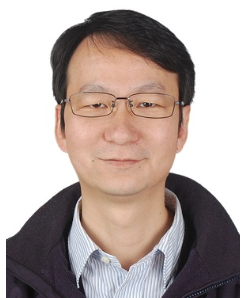 | Prof. Xiao WuSouthwest Jiaotong University, China Xiao Wu is a Professor of Southwest Jiaotong University, Chengdu, China. He received the Ph.D. degree in Computer Science from City University of Hong Kong, Hong Kong. He was with the School of Computer Science, Carnegie Mellon University, Pittsburgh, PA, USA, and at the School of Information and Computer Science, the University of California, Irvine, CA, USA, as a Visiting Scholar from 2006 to 2007 and from 2015 to 2016, respectively. His research interests include artificial intelligence, computer vision, and intelligent transportation systems. He has authored or co-authored more than 150 research papers in well-respected journals, such as TIP, TMM, and TMI, and prestigious proceedings like CVPR, ICCV, and ACM MM. He received Second Prize of Natural Science Award of Sichuan Province, China, in 2025, the Second Prize of Natural Science Award of the Ministry of Education, China, in 2016, the Second Prize of Science and Technology Progress Award of Henan Province, China, in 2017, the Best Paper Award of International Conference on Multimedia Modeling, in 2021, and the Best Paper Award of ACM International Conference on Multimedia Asia in 2024. Title: Human-Centered Interaction Detection and Applications Abstract: Understanding human-centered interactions is pivotal for developing intelligent systems capable of perceiving, interpreting, and responding to human activities in complex environments. This presentation will provide a comprehensive overview of advanced research in human-object interaction (HOI) detection, extending the scope to encompass critical interaction paradigms such as human-object-human (HOH), human-object-object (HOO) and contactless human-object interactions. The core focus will be on elucidating the methodologies, challenges, and practical applications of these interaction detection technologies within industrial settings. |
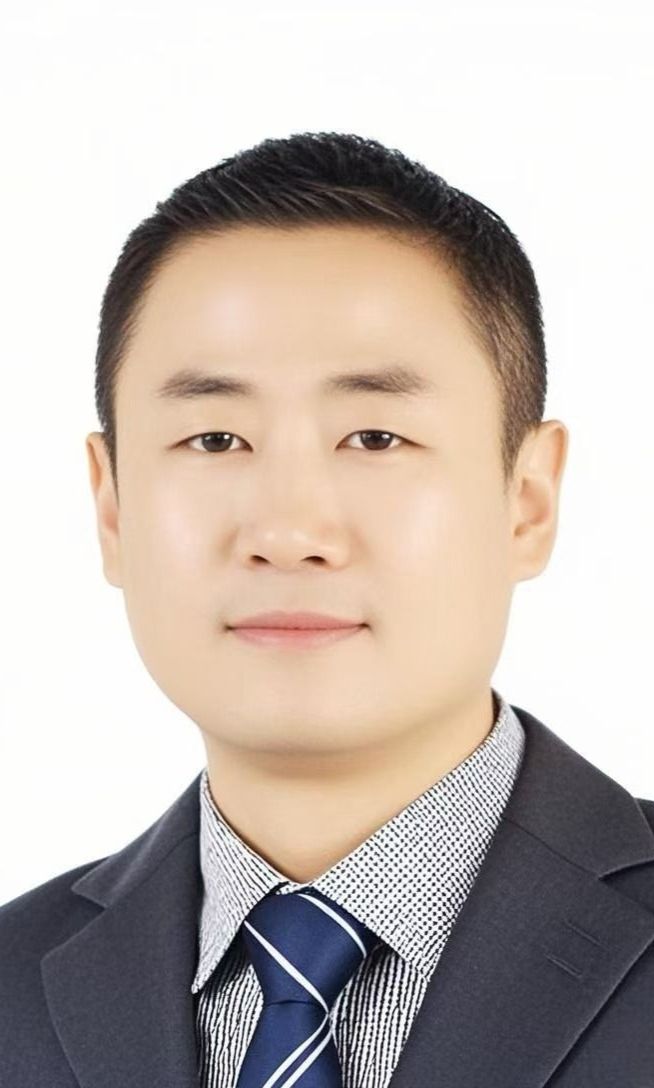 | Prof. Xin YangSouthwestern University of Finance and Economics, China Yang Xin, Ph.D. in Engineering, Professor, and Doctoral Supervisor, serves as Associate Dean of the School of Computer and Artificial Intelligence at Southwestern University of Finance and Economics, and Director of the Sichuan Provincial Collaborative Innovation Center for Internet Finance Innovation and Regulation. He has long been engaged in research on machine learning, data mining, and financial technology, with a focus on the research and application of artificial intelligence theories and methods in scenarios such as financial risk control, compliance auditing, and financial supervision. He has been recognized as a "World's Top 2% Most-Cited Scientist" and a "Tianfu Qingcheng Plan" Leading Talent in Technological Innovation. He is Vice Chairman of the Chengdu Association of Young Scientists and Technologists, a Distinguished Member and Distinguished Communicator of the China Computer Federation (CCF), Secretary-General of CCF Chengdu, Chair (2022–2023) of the YOCSEF Chengdu Academic Committee, Standing Committee Member of CCF Digital Finance Subcommittee, Executive Committee Member of CCF Technical Committee on Big Data, Executive Committee Member of CCF Large Model Forum, Senior Member of the Chinese Association for Artificial Intelligence (CAAI) and Standing Committee Member of its Granular Computing and Knowledge Discovery Technical Committee, and Executive Council Member of the Sichuan Artificial Intelligence Society. He has led more than 10 research projects funded by the National Natural Science Foundation of China, the Ministry of Education, and provincial science and technology departments. He has published over 100 papers in CCF-recommended high-quality journals and conferences, including IEEE TKDE, CVPR, KDD, ICLR, ACL, WWW, AAAI, MM, IJCAI, SCIENCE CHINA Information Sciences, Chinese Journal of Computers, and Journal of Software. He has authored or edited 7 textbooks, monographs, and translated works, and holds more than 20 authorized national invention patents. He serves as Executive Editor-in-Chief of the international journal Human-Centric Intelligent Systems (EI-indexed) and has served as Chair or Program Committee Chair for more than 10 international conferences. He has independently developed and released AccMind, the first large language model for the accounting education vertical domain in China, and the "Zhihui" digital-intelligent accounting education platform. His related achievements have received the Second-Class Award of the Sichuan Provincial Science and Technology Progress Award and the Second-Class Award of the Wu Wenjun Artificial Intelligence Science and Technology Progress Award. Title: Federated Continual Learning Abstract: With the advancement of edge intelligence, large models, and distributed artificial intelligence, real-world data increasingly exhibits significant dynamic, distributed, and spatio-temporal heterogeneous characteristics. Traditional federated learning primarily focuses on privacy preservation and collaborative training in the spatial dimension, while continual learning emphasizes knowledge accumulation and sustained adaptation over the temporal dimension. However, in real scenarios, changes in data distribution are often influenced by both spatial correlations and temporal evolution simultaneously, resulting in complex spatio-temporal coupling relationships among knowledge transfer, task variation, and model updates across clients. How to achieve continual collaborative learning for dynamic spatio-temporal scenarios in privacy-constrained distributed environments has become a key research direction for the next-generation artificial intelligence learning paradigms. This talk centers on "Spatial-Temporal Federated Continual Learning," with a focus on exploring a unified perspective and synergistic mechanisms between federated learning and continual learning in the spatio-temporal dimensions. Starting from knowledge collaboration in space and knowledge evolution over time, the talk analyzes the intrinsic connections between federated learning and continual learning, discusses core issues such as spatio-temporal heterogeneity, dynamic distribution drift, and catastrophic forgetting, and further introduces research directions and related applications including knowledge fusion, heterogeneous collaboration, and continuous adaptive learning in dynamic environments. |
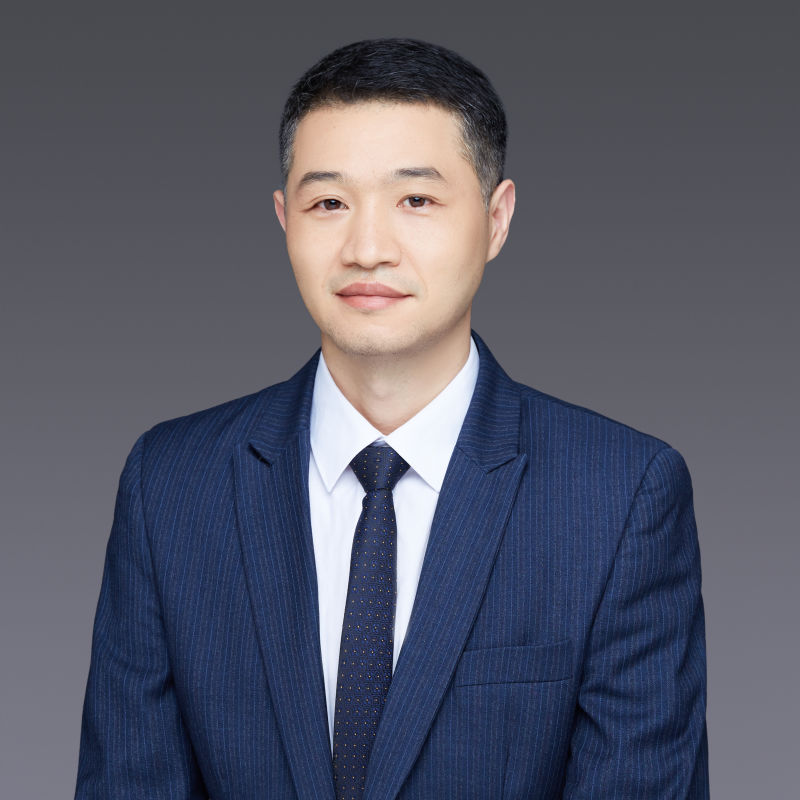 | Prof. Xiaolin QinUniversity of Chinese Academy of Sciences, China Xiaolin Qin is a Professor and Deputy Chief Engineer at the Chengdu Institute of Computer Applications, Chinese Academy of Sciences (CAS). He is also a Professor at the University of Chinese Academy of Sciences, and a Doctoral Supervisor. He is a Senior Member of CCF, CICC, and IEEE. His research focuses on automated reasoning, spatial intelligence, and domain-specific large language models for industrial sectors.Prof. Qin has been recognized as a recipient of the National Talent Program, the Sichuan Tianfu Qingcheng Program for Scientific and Technological Innovation Leaders, a Provincial Academic and Technical Leader, and a recipient of both the Provincial Top Young Talent and Distinguished Young Scholar awards, as well as the CAS Western Young Scholar Award. He has received a provincial/ministerial first-class award, the Second Prize of the Sichuan Provincial Science and Technology Progress Award, and the CAS President's Award. He has led over 10 major research projects, including grants from the National Natural Science Foundation of China, the National Key R&D Program, the CAS STS Program, and the Sichuan Provincial Major Special Project on Artificial Intelligence. He has published more than 30 high-quality papers in top journals and conferences such as IEEE TIP, ACL, CVPR, and ICCV. Title: Large Models Cross-domain Deep Perception: Spatial Intelligence to Embodied Intelligence Abstract: This report begins with discussions on Tesla FSD and Huawei ADS solutions, providing a concise introduction to large visual models and deep perception models, along with the challenges they face—particularly in cross-domain few-shot visual learning and embodied intelligence for robotics. It presents the team's advances in cross-domain deep perception, proposing a Cross-domain Fourier Boundary Feature Capture Network to mitigate excessive capture of deep semantic information through geometric structure regularization. Additionally, a Cross-domain Few-shot Depth Estimation method is introduced, which leverages semantic segmentation datasets and adaptively estimates depth using minimal depth labels via cross-domain fine-tuning. The team has also constructed a novel 3D Localization and Perception Dataset and proposed an innovative Human Pose Estimation method. Finally, briefly introduce the representative scenario cases of our group in spatial intelligence and embodied intelligence. |
